A Holistic Approach to Conception: One Couple's Preparation
Written by Cara Burns, Photographer, BA Psychology + Counselling Student| Reviewed June 2026
This article shares one couple's personal approach to preparing for conception. It's general information and lived experience, not medical advice. Every person and every couple is different, so take what resonates and discuss your own preparation with your healthcare provider.
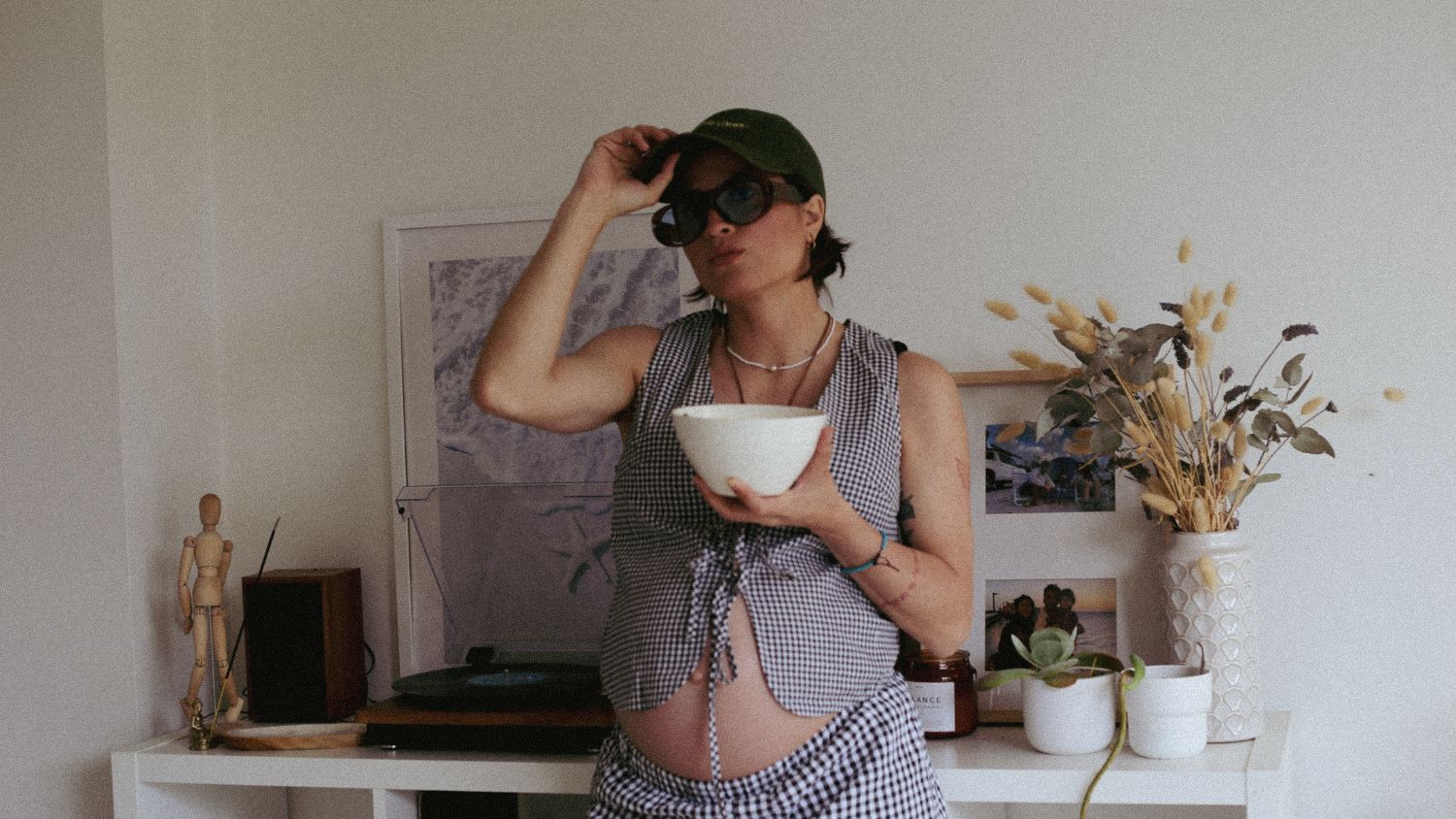
Considering a more holistic approach to conception? Doula and photographer Cara Burns spent months preparing herself, her partner, their relationship, and her body and mind for conception, pregnancy and parenthood. Here, she walks through the elements she folded in, with the reminder that every couple is unique and prepares in the ways that suit their own circumstances.
Cara puts the whole thing in perspective beautifully:
"It's common to spend 12 to 18+ months planning a wedding, spending many tens of thousands of dollars on this, or a new car, on our education. It's not as common to spend this time or money preparing our bodies, minds, relationship and life for a new family member. I'm always pretty stumped by this."
So how exactly did she prepare?
Fertility education, for both of them
For Cara, it started with understanding her own body, and bringing her partner along for it.
"In 2019 I committed to healing chronic pelvic pain and menstrual cycle pain through acupuncture. I spent the next couple of months (and continue to) learn about my cycle, connecting deeply with it. My partner joined the journey and learnt a lot about my cycle too. This was massive."
That shared understanding, both partners learning how her cycle actually works, is something a lot of couples skip. Making it a joint project rather than her sole responsibility set a tone for everything that followed.
Using nutrition to support fertility
"Our diet has always been pretty good. I'm vegetarian, he's pescatarian, we make the majority of our meals ourselves. Beyond this, we've reduced our alcohol intake and caffeine consumption, implemented a water filter at home and consciously purchased fruit and veg organically where we could (including from our garden)."
Nothing dramatic here, and that's rather the point. Small, sustainable adjustments (less alcohol and caffeine, more home-cooked whole foods) are the kind of changes that actually stick through pregnancy and beyond.
Tailoring their exercise
Movement looked different for each of them, shaped around their bodies and their lives.
"He's in landscape construction, so is incredibly fit running his own gig, whilst also a surfer and mountain biker. I reduced intense exercise due to my chronic pain, so instead I walk most mornings, stretch every night and swim. We both love snowboarding, so winters are a big season of exercise for us."
The lesson in this: preconception exercise isn't about pushing harder. For Cara, managing chronic pain meant gentler, consistent movement, walking, stretching, swimming, rather than intensity. The right exercise is the kind that supports your body where it's actually at.
Managing chronic health conditions before conception
This is where Cara was especially proactive, getting on top of existing health issues before pregnancy rather than during it.
"My iron has always been low, and after experiencing the fatigue that comes with it, we wanted to get on top of it before pregnancy. Due to monthly blood loss, my diet didn't help much, so an iron infusion was done and I've since kept on top of all my levels."
She also pursued long-standing pelvic pain properly:
"Chronic pelvic pain led me to explore the possibility of endometriosis through a laparoscopy (after years of exploring other options), as my biggest fear has been dealing with this sporadic and chronic pain postpartum, as it's really debilitating. So that was a priority of ours."
Addressing known health issues before trying to conceive, low iron, suspected endometriosis, is one of the most genuinely useful things in Cara's whole approach. If you have an ongoing health concern, the preconception window is the ideal time to work through it with your doctor.
Supplements to support reproductive health
Cara and her partner both took a preconception approach to supplementation, guided by their own needs.
"We both started taking prenatals about seven months ago. We are both on NAC, omega 3 and 6, magnesium. I'm also on B12 and a prenatal, and my partner's on a B Complex men's prenatal."
Worth noting: this is what worked for Cara and her partner based on their individual circumstances, not a prescription. Supplement needs are personal, and what's right for you depends on your own health, diet and any deficiencies (Cara's low iron being a good example). It's worth working out your own with a practitioner. The one near-universal is starting a quality prenatal in the months before conception, ideally one with active folate, to build your stores ahead of time.
Adjusting their mindset
This, for Cara, was the heart of it.
"Mindset was the biggest preparation for us. We talked A LOT about our childhoods, our upbringing, our parents. What we hope to carry on, what we hope to leave behind. Understanding how our childhood has shaped certain reactions and beliefs, becoming aware of them."
Her background feeds directly into this work:
"I'm a psychology major and work as a birth doula, so I feel I'm pretty proactive in this area. Fraser is grateful to follow my lead and meets me in it. I major in gender, so that's been a potent theme in conversation, breaking down the gender stereotypes of what this experience will be."
And the unexpected gift:
"Through all of this, an unexpected gift has been the ongoing practice of communication. It's an ever-evolving challenge, but I feel like we understand one another and can communicate much more effectively now than three years ago, when we could have started trying. We wanted that to be second nature so we could continue it in the tougher times postpartum."
That's a genuinely wise reason to take the time. The communication habits you build before a baby arrives are the ones you lean on hardest once they do.
"We speak a lot about what kind of parents we hope to be, what we expect from each other and the relationship, how to prioritise the relationship, what's important for the journey for each of us, what support we'll be putting in place."
And, importantly, she holds it all lightly:
"There's a lot we can do to prepare, but at the same time we're conscious of all that's out of our control, and surrendering to the journey from the very beginning."
Addressing stress
"A stress-reduced and present approach to living was a goal of ours, so we began our own businesses thinking ahead of the possibilities it brings for our family life. We work too much and live too little in our modern world."
A fitting note to end on. So much of preconception advice focuses on the physical, but Cara's whole approach is a reminder that how you live, your stress levels, your relationship, your sense of presence, matters just as much as what you put on your plate.
moode answers your questions about preparing holistically for conception
What does a holistic approach to conception involve?
It means preparing more than just your body, considering nutrition, movement, mental and emotional health, your relationship, stress levels and any existing health conditions together. As Cara's story shows, that can include cycle education, addressing known health issues, supplementation, communication, and a more present approach to daily life. Every couple's version looks different.
How long before trying to conceive should you start preparing?
Many people begin around three months ahead, which aligns with the standard advice to start a prenatal in that window. Some, like Cara, take longer, using the time to address health conditions, build habits and prepare emotionally. There's no single right timeline.
Should both partners prepare for conception?
It's well worth it. Sperm health, nutrition, lifestyle and emotional readiness all matter for both partners. As Cara describes, making preparation a shared project, from learning about the cycle together to taking supplements alongside each other, sets a strong foundation.
How do you prepare mentally and emotionally for parenthood?
Honest conversations help: about your own upbringing, the kind of parent you hope to be, your expectations of each other, and how you'll protect your relationship and arrange support. Building strong communication before a baby arrives makes the harder postpartum stretches easier.
Can you address health conditions before pregnancy?
Yes, and the preconception window is an ideal time. Cara addressed low iron with her doctor and investigated chronic pelvic pain before trying to conceive. If you have an ongoing health concern, it's worth working through it with your healthcare provider ahead of pregnancy.
A note from moode
Cara's approach is a lovely reminder that preparing for a baby is whole-life work, not just a checklist. On the nutritional side, starting a quality prenatal in the months before conception is one of the simplest, most evidence-backed steps. The Prenatal by moode contains calcium folinate, choline, iodine, zinc and a full B complex, designed for exactly this preconception window. Always read the label and follow directions for use, and work with your practitioner on what your own body needs.
About Cara Burns
Cara Burns is a birth doula and photographer with a background in psychology and gender studies, sharing her personal, holistic approach to preparing for conception and parenthood.