What Is Ovulation Tracking? A Naturopath's Guide to Your Fertile Window
Written by Aimee Lewis, Fertility and Menstrual Health Naturopath, Flow Naturopathy | Reviewed June 2026
"The more you get to know your body from the inside out, the better equipped you are to enter the vortex of conception, childbirth and motherhood." - Jess Rosenberg, Founder of moode
Understanding ovulation and your cycle
For many women, understanding how their cycle actually works only becomes a priority when they're trying to conceive. And if you feel disconnected from your menstrual cycle, ovulation and your body's rhythms, that's not a personal failing. Women's health has been under-resourced and under-discussed for a very long time.
The good news is that the information is within you. Your body gives clear, readable signals about where you are in your cycle. Learning to recognise them is one of the most practical tools available for anyone trying to conceive, and it costs nothing. Here's what ovulation tracking actually involves, what the signs look like, and how to use the information.
What is ovulation?
Ovulation is the physiological process of a mature egg being released from the ovary, where it travels down the fallopian tube ready to be fertilised. It's a single event in your cycle, but the fertile window around it spans several days, and understanding that window is what ovulation tracking is really about.
How to chart your menstrual cycle
Your cycle begins on Day 1, the first day of your period. Once menstruation ends, you enter the follicular phase, during which your ovarian follicles are preparing to release an egg and oestrogen and testosterone are rising. This is when your fertile window begins to open.
Ovulation occurs in the middle of your cycle. On a typical 28-day cycle, this is roughly Day 14, though cycles vary significantly between women, and even from month to month in the same woman. After ovulation, the luteal phase begins, progesterone rises, and the likelihood of conception drops sharply.
What is the fertile window?
Your fertile window spans approximately six days: the five days before ovulation and the day of ovulation itself.
Sperm can survive in cervical mucus for up to five days, which means sperm from intercourse in the days before ovulation can still be present when the egg is released. This is why the days leading up to ovulation, not just the day of, are the most strategically important for conception.
Fertile windows are unique to each woman's cycle and can shift from month to month in response to stress, illness, travel, diet and exercise. There's no universal day that is the "right" day for every woman.
Natural signs that ovulation is approaching
Changes in cervical mucus
The most reliable natural sign of approaching ovulation is an increase in cervical mucus. This mucus supports sperm in travelling toward the egg, and it becomes noticeably different in the days leading up to ovulation: clearer, more slippery and stretchy, often described as resembling egg white. You'll notice it on underwear, toilet paper, or as a feeling of increased wetness around the vulva.
It's worth noting that increased mucus doesn't always result in ovulation. This is particularly relevant for women with PCOS or those experiencing high levels of stress. But for most women, this is the clearest and most accessible signal to watch for.
Libido changes
Libido often increases in the days before ovulation, alongside increased energy and desire for social connection. This is your body's physiological way of promoting fertility: oestrogen and testosterone work together to heighten libido as you approach peak fertility. It's worth paying attention to, particularly if you aren't using other tracking methods.
Basal body temperature (BBT)
You can track ovulation by measuring your temperature immediately upon waking each morning, before getting out of bed, speaking, or drinking anything. As Aimee Lewis explains: "You'll need a thermometer which goes up to at least one decimal place, usually sold as oral ovulation thermometers. As readings are most accurate after at least four consecutive hours of sleep, people who are up a lot in the night, poor sleepers, parents with babies, people needing to urinate, shift workers, a wearable device like the Tempdrop, which automatically records overnight temperature and sends this information to an app, might be a helpful alternative. The best way to collate this data is with a cycle tracking app, try to turn off cycle prediction alerts if you can, or with a physical cycle tracking sheet. If you notice your body temperature has increased by at least 0.3 degrees Celsius over three days, then it's safe to say ovulation has occurred and the fertile window is over."
Mittelschmerz
Some women experience a brief, one-sided lower abdominal pain or discomfort at the moment of ovulation. Known as mittelschmerz, this is caused by the release of the egg from the follicle and can feel like a twinge, cramp or dull ache on the side of whichever ovary is releasing the egg. Not all women experience this, but if you do, it's a useful real-time signal that ovulation is happening.
Are ovulation apps reliable?
With caveats. As Aimee explains: "Cycle tracking apps are a great way to collate information, however they are not usually reliable in determining our fertile window. This is because they are based on algorithms and not our body's unique rhythm, which changes from cycle to cycle. So many things can alter the fertile window, stress, diet, exercise, illness, travel, weight changes, and I am yet to see an app that can account for all these realities of life."
The research backs her up. When researchers at Weill Cornell Medicine assessed 53 of the most popular fertility websites and apps, only four accurately predicted the full fertile window when measured against the medical gold standard. Interestingly, the apps were much better at naming the single day of ovulation than at mapping the days around it, which is exactly where they tend to fall short for people trying to conceive. Apps are genuinely useful for recording your observations, BBT, mucus changes, symptoms, but the fertile-window predictions they generate should be treated as a starting point, not a reliable guide.
Are ovulation tests reliable?
Both saliva and urine ovulation tests exist, and both are used to predict peak fertility timing.
Urine tests detect the surge in luteinising hormone (LH) that occurs 24 to 36 hours before ovulation. These are the most widely used and reasonably reliable at identifying the LH surge, though they don't confirm that ovulation actually occurred, only that the hormonal signal was present.
Saliva tests detect increased levels of salt in saliva, which indicates a rise in oestrogen approaching ovulation. Less commonly used, but a valid alternative for women who prefer not to use urine tests.
Both types can be useful tools, though the ongoing cost of using them cycle to cycle adds up. Combined with BBT tracking and mucus observation, they provide a more complete picture than any single method alone.
How often should you have sex during the fertile window?
Once you notice increased cervical mucus in the middle of your cycle, that's the signal to act on. Every second day through the fertile window is sufficient. Daily is also fine, there's no evidence that daily intercourse during this period reduces sperm quality significantly for most men.
Research suggests that intercourse two days before ovulation gives the highest probability of conception. That makes cervical mucus observation and LH testing particularly valuable, both help you identify the approaching window rather than reacting after it has already opened.
When should you take a pregnancy test?
Pregnancy tests detect hCG, a hormone produced in early pregnancy. hCG can be detected in urine as early as 10 days after conception, but results at this stage are less reliable. Waiting until the first day of your expected period gives a more accurate reading. Waiting one week after your period was due gives the most reliable result of all.
What if you're not sure you're ovulating?
PCOS, hormonal imbalances, long-term use of the pill and irregular cycles are all common reasons why ovulation may not be occurring regularly, or may be difficult to detect. If you've been tracking and aren't seeing consistent signs of ovulation, or if your cycles are significantly irregular, it's worth seeing your GP or a fertility specialist to explore what's happening.
Options range from supporting natural ovulation through dietary and lifestyle changes, to ovulation induction if infertility persists. There's a range of pathways, and finding the right one for your individual situation is worth doing sooner rather than later. For more information on when to seek specialist support, see our guide to prenatal care options in Australia.
Supporting your body through the preconception period
Fertility specialists recommend beginning preconception preparation at least three months before trying to conceive. This is the window in which nutritional status, egg quality and cycle regularity can all be meaningfully influenced.
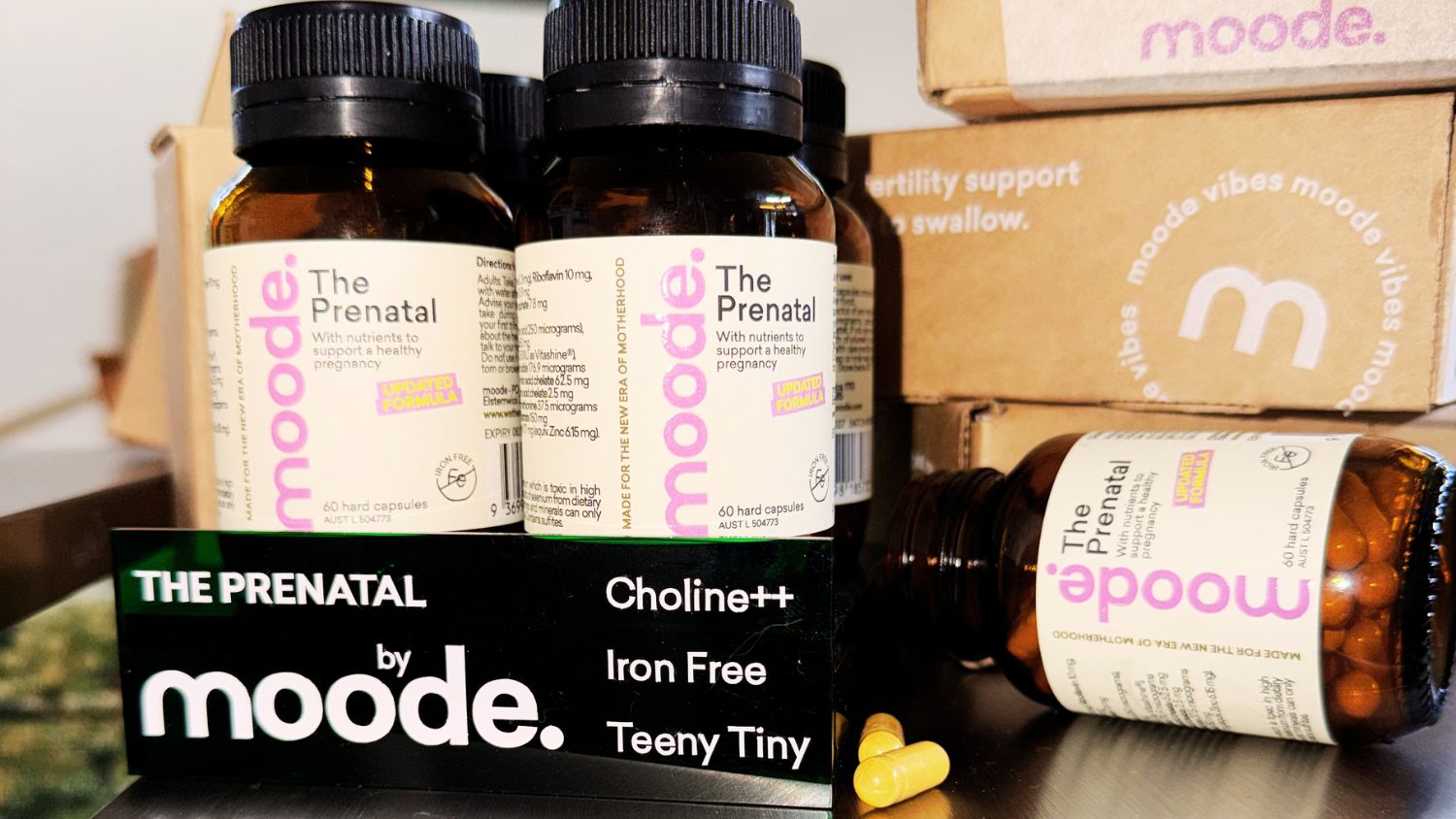
A quality prenatal supplement supports the nutritional gaps that are common in this period, particularly folate, choline and iodine. The Prenatal by moode is formulated specifically for preconception and pregnancy. Always read the label and follow directions for use.
moode answers your questions about ovulation tracking
How do I know if I am ovulating?
The most accessible signs are changes in cervical mucus, clearer, more stretchy and slippery in the days before ovulation, and a rise in basal body temperature of at least 0.3 degrees Celsius over three days after ovulation. LH testing strips can predict the LH surge 24 to 36 hours before ovulation. Using two or more of these methods together gives the most complete picture.
What if my cycle is not 28 days?
A typical cycle ranges from 21 to 35 days. Ovulation doesn't always occur on Day 14, it occurs approximately 14 days before your next period, regardless of cycle length. On a 35-day cycle, ovulation is more likely around Day 21. Tracking your own cycle over several months is the most reliable way to understand your personal pattern.
Can stress affect ovulation?
Yes. Significant physical or emotional stress can delay or suppress ovulation by disrupting the hormonal signals that trigger it. This is one of the reasons cycle tracking apps that rely on average cycle length are unreliable, they can't account for the impact of what's happening in your life.
Is it possible to ovulate more than once in a cycle?
Releasing two eggs in a single cycle is possible, this is what leads to non-identical twins, but both eggs are released within a 24-hour window. It isn't possible to ovulate twice in the same cycle at separate times.
How long does the egg survive after ovulation?
The egg survives for approximately 12 to 24 hours after ovulation. If it isn't fertilised within that window, it's reabsorbed. This is why the days leading up to ovulation, when sperm is already present, are more strategically important than the day of ovulation itself.
About Aimee Lewis
Aimee Lewis is a Fertility and Menstrual Health Naturopath at Flow Naturopathy, specialising in preconception care, cycle health and hormonal wellbeing. Visit Flow Naturopathy for more from Aimee.