When Should I Start Taking a Prenatal Vitamin?
Written by Jess Rosenberg, moode Founder | Reviewed June 2026
The most common question I get asked about The Prenatal is not what is in it. It is when to start taking it.
Most women assume you begin a prenatal when you get a positive test. The honest answer is that by then, some of the most critical windows for your baby's development have already opened and closed. The neural tube — the structure that becomes the brain and spinal cord — closes in the first four weeks of pregnancy. For most women, that is before they even know they are pregnant.
This is not meant to create anxiety. It is meant to give you something useful: a reason to start earlier than you probably planned to, and a clear understanding of why.
Why a prenatal is not just a pregnancy supplement
A prenatal is not something you take because you are pregnant. It is something you take to prepare your body for the possibility of pregnancy - and to keep your own nutritional reserves from being depleted by the demands of growing a baby.
Most of us have spent our adult lives trying not to get pregnant. When the decision flips, there is a lot to restore. Years of a standard diet - even a healthy one - can leave nutrient levels lower than they need to be for a pregnancy to thrive. A quality prenatal is the most practical way to close those gaps before conception, not after.
What makes a prenatal different from a regular multivitamin
A prenatal is a multivitamin, but a very specific one. The nutrients it contains, and the forms and doses in which they appear, are calibrated for the demands of conception and pregnancy, not general health maintenance.
The key differences:
Folate
A standard women's multivitamin may contain folic acid, the synthetic form. A quality prenatal uses an active form such as calcium folinate or methylfolate, which the body can use directly without conversion. This matters because a significant proportion of women carry a gene variant that impairs folic acid conversion.
Choline
Essential for foetal brain development, yet absent from most multivitamins entirely. The recommended intake in pregnancy is 450mg daily. Most women are not getting anywhere near that from diet alone.
Iodine
Required in higher amounts during pregnancy to support foetal thyroid development. Rarely included in regular multivitamins at meaningful doses.
Zinc and Vitamin D
Both at higher doses than a standard multi, because pregnancy significantly increases demand for both.
A prenatal does not need to contain everything. It needs to contain the right things, in forms and doses that are actually useful.
When is the right time to start?
Three months before you start trying to conceive is the recommendation from most health practitioners - and the reasoning is specific.
Your eggs take approximately three months to mature before ovulation. The nutritional environment they develop in during that time directly affects their quality. Starting a prenatal at the point of trying, rather than three months before, means the eggs maturing during your first cycles of trying were not supported by the nutrients you have only just started taking.
The same logic applies to sperm, which takes approximately 72 days to mature. If your partner is involved, their supplementation timing matters too.
What if you are already pregnant?
Start immediately. The neural tube window may have already closed, but the nutritional demands of pregnancy are significant from the first trimester through to birth, and beyond, if you are breastfeeding. There is no point at which a quality prenatal stops being useful.
As fertility nutritionist Kelly Benton puts it: "A prenatal supplement should be part of every woman's preconception and pregnancy plan. This is important to ensure that regardless of food intake, they are meeting the basic requirements of certain nutrients known to play a key role in the healthy development of their baby."
Do you need a prenatal if you eat well?
Yes - and this is important. Even the most carefully considered diet struggles to consistently deliver the doses of folate, choline and iodine that pregnancy demands. Nausea in the first trimester makes consistent eating even harder. Soil depletion means the nutritional content of vegetables is lower than it was a generation ago.
A prenatal is not a replacement for a good diet. It is what makes a good diet sufficient when it otherwise might not be.
How long should you keep taking it?
Through pregnancy and ideally through breastfeeding. The nutritional demands of producing breast milk are significant, and the depletion that can follow birth - particularly of iron, choline and B vitamins - is real. moode's prenatal is iron-free by design, which means it is suitable to continue through the postpartum period without contributing to digestive discomfort.
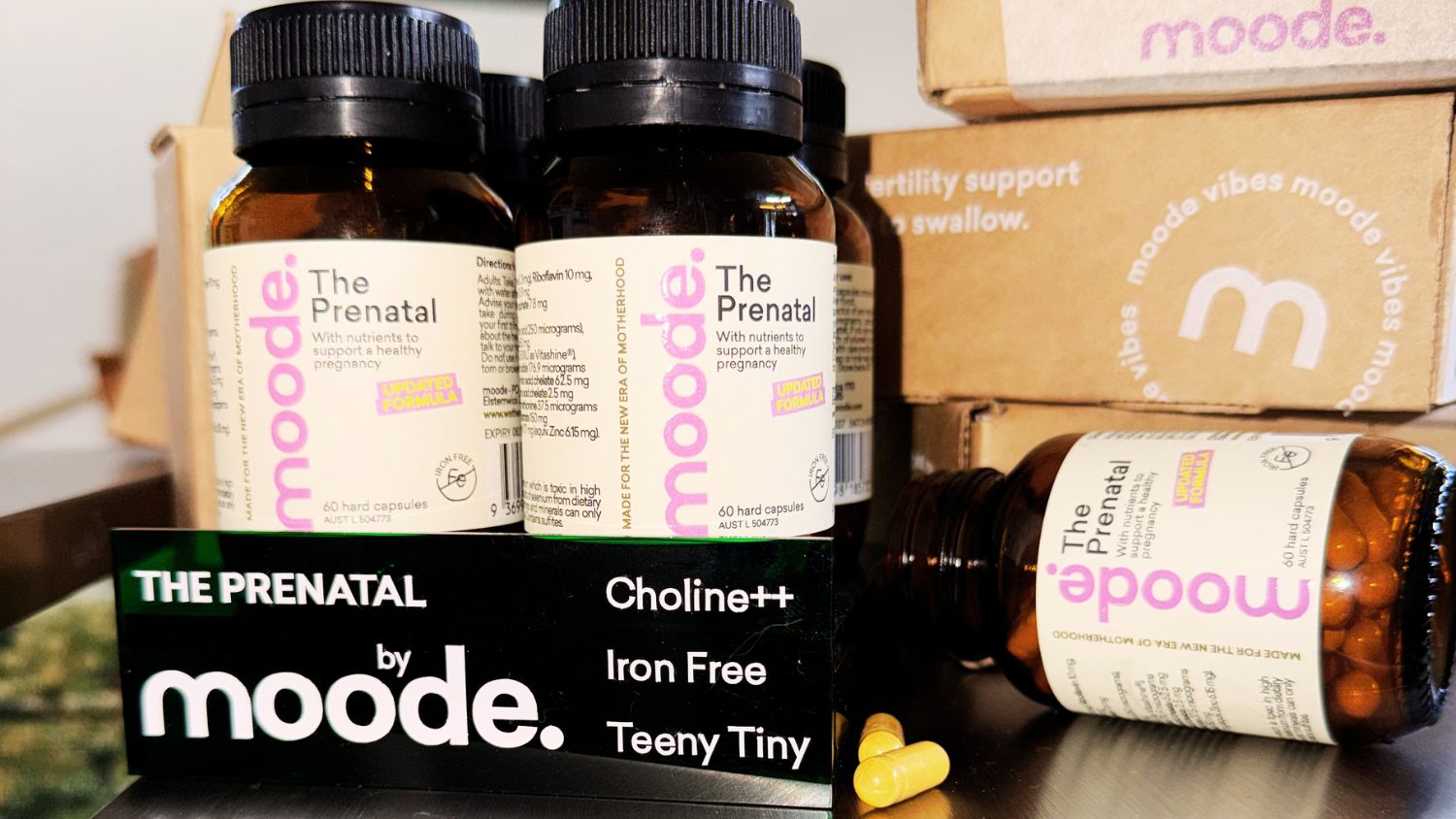
The Prenatal by moode contains calcium folinate, 300mg of choline, zinc, iodine and a full B complex - formulated for preconception, pregnancy and breastfeeding. Always read the label and follow directions for use.
moode answers your questions about when to start a prenatal
Can I start a prenatal while on the pill?
Yes. Starting a prenatal while still on contraception makes sense if you are planning to try within the next six to twelve months. It gives your body time to build nutrient stores before you stop contraception, and supports your own health in the meantime. Better yet, come off the pill and replace this with your prenatal.
Is there such a thing as starting too early?
Not really. A quality prenatal supports your general nutritional health whether or not you are actively trying to conceive. The only consideration is cost -if you are years away from trying, a good women's multivitamin is a more appropriate interim step.
What form of folate should I look for?
Avoid folic acid if you can. Look for calcium folinate or methylfolate - both are active forms that do not require conversion by the body. This is particularly important if you have (or suspect you have) the MTHFR gene variant, which impairs folic acid conversion and is more common than most people realise.
Should my partner take anything?
Yes. Sperm quality is directly affected by zinc, selenium, antioxidants and CoQ10. A men's preconception supplement or a good quality zinc and antioxidant combination is worth considering three months before you start trying, for the same reasons timing matters for women.
Can I take a prenatal if I am not sure I want to get pregnant yet?
Absolutely. A quality prenatal supports your nutritional health regardless of your timeline. Many women take one years before actively trying because the nutrients it contains - particularly choline, folate and B vitamins - support energy, mood and hormonal health more broadly.
About the author
Jess Rosenberg is the founder of moode and a trained nutritionist and naturopath. She created The Prenatal after her own experience of pregnancy left her questioning the quality of what was available on the Australian market. Learn more about moode.